













Article contributed by Sunshine Grace
In 2022, during a week-long ayahuasca retreat in Costa Rica, my understanding of reality began to unravel. I started hearing a profoundly compassionate and wise pedagogical voice. I experienced telepathic communication with the curanderos (shamans) facilitating the ceremonies — fitting, given that ayahuasca contains a compound researchers have actually nicknamed “telepathine” because it has the tendency to induce telepathy. As awe-inspiring as that week was, it was also deeply frightening. I was a lifelong atheist, and everything I believed about reality was being deconstructed in real time.
The Voice Arrives Home
When I returned to Austin, the voice didn’t stop. It continued, and so did what I’ve come to call “teaching dreams,” which have occurred nearly every night now, for four years. I also began hearing snippets of mundane conversations from others in the hypnagogic state; the liminal space between sleep and waking. Nothing intriguing, just casual fragments. (“Babe, pass the ketchup please.”) Nothing I could take to the police to solve serial killer murders, unfortunately. But it was enough to know something significant was shifting in me.
With a master’s degree in psychology and background as a parapsychologist, I knew instinctively to be careful about who I told. The closest community I could find was Austin’s contemporary psychedelic spirituality scene, where some members had also heard profound voices in ceremony, and even Kundalini crises, but my situation was unique, even in that setting. My voice didn’t stay in ceremony. And it eventually began to include scary tests, known as “pruebas” in Amazonian culture. Because I read everything I could get my hands on, I knew that these phenomena overlapped squarely with shamanic illness, and somewhat with voice hearing experiences. And I also knew that these carry a long and painful history of pathologization in the West.
The Darkness Before the Dawn
Seven months in, the crisis deepened. I began experiencing intense night terrors; apocalyptic visions of the United States under attack. Because I’d had precognition before about 9/11 and a major car accident on I-35, and those events came to fruition, I believed the night terrors were also true. I stockpiled gas masks, CBR suits, food, and batteries. I duct taped my windows. I pleaded with friends to leave Austin. I stopped sleeping through the night. And family and friends began doing wellness checks on me.
My brother eventually convinced me to leave the closet I’d barreled myself in for days, glued to the police scanner radio app on my phone. I left my apartment in a frenzy, and fled in the middle of the night to rural Texas. I spent the next five weeks living out of my car, staying with friends and family in short stints, while the night terrors continued. If you’ve ever lived through an active war, you know this depth of hell, where the nervous system is so charged, you don’t even feel safe in your body. I described it later as “It was as if the world was on fire, and I was outside with no skin.” Although I knew on some level that I was moving through some kind of initiation; but I didn’t have language for it yet, because sadly, despite the work of people like Christina and Stanislav Grof, (who literally wrote the book Spiritual Emergency), our mainstream narrative holds no compassionate container for this kind of experience.
Then it got worse. While driving a long stretch of highway between Phoenix and Denver, the voice I had trusted manipulated me into harming myself. I won’t go into detail, but the consequences were physical, psychological, and existential, a dangerous polycrisis. I should have been admitted to a hospital for the physical crisis, but I was too embarrassed, knowing they would think I was “psychotic” (whatever that means). So instead, my mind broke into a thousand pieces, my body was in crisis, and worst of all, I entered a long existential crisis over the confusion that something so loving could also be dangerous. Eventually, I made my way home to Austin and a supportive friend helped me move back into my apartment. I spent many weeks barely able to breathe while my nervous system remained in fight-or-flight, and nursed my body back to health over several months, feeling alone, scared, and confused.
And yet, in the same period, the voice sent me soothing songs in the mornings that made me laugh. It encouraged me to rest. And it gifted me three times with what’s known in near death experiencers (NDEer) circles as “the Love experience”. This dichotomy only further deepened my confusion over the fact that this voice was both the wound and the salve.
Looking for Maps
Throughout all of this, I searched desperately for frameworks that could hold what I was experiencing. I found partial maps in William James’ writings on mysticism, Carl Jung’s spiritual emergency, Mircea Eliade’s scholarship on shamanism, Joseph Campbell’s hero’s journey, and Sandra Ingerman’s lived experience with shamanic illness. I did a deep dive on Shipibo-Conibo healing traditions in the Amazon, digesting Singing to the Plants and Ayahuasca Visions. And I found comfort from the Hearing Voices Network (HVN), whose work has been instrumental in reframing voice hearing as an important human experience rather than a pathology. But it was the documentary film Take These Broken Wings, a 2008 documentary film by Daniel Mackler that explores two women recovering from schizophrenia without the use of psychiatric medication, that convinced me of the “radical” view that regardless of the root cause of distressed states…the solution is connection and safe space. It would be three years before I had the capacity to dive into Christina Grof’s account of her fourteen-year spiritual emergency, and the foundational work that the Grofs, Roberto Assagioli, John Weir Perry, Paul Rebillot, R. D. Laing, and others have done in the field of transpersonal, humanistic and depth psychology.
For the Clinicians: A Shared Humanity
Although voice hearing and vision seeing are, I am convinced, a natural part of the human experience for many, they may be catalyzed by nothing or by a variety of phenomena. Some catalysts include: contemplative practices, a calling to be a shaman or healer, spiritual emergency or awakening, deity and nature spirit contact, dream consciousness crossing over into waking consciousness, spirit possession, ancestor communication, telepathy, mediumship, communication with the Divine, highly sensitive persons (HSPs), intense stress, and trauma. But regardless of the catalyst, to the voice hearer or vision seer, the voices and visions are real.
Leaders in the Hearing Voices Movement have been saying for decades that the most compassionate approach is to meet people with dignity, respect, and genuine curiosity. As someone with lived experience who was harmed by a culture that pathologizes voice hearing, it’s essential to trust that individuals are capable of, in time, making their own meaning.
Furthermore, I understand that, at the time of this writing, many Western clinicians still live within a system that forces them to diagnose voice hearers. Until we change the systems we operate in by inviting the option to care for, without diagnosis, clinicians will continue to feel limited in their ability to help individuals. Towards this, I encourage clinicians to direct their energy, even if it’s through small choices, towards changing the system they operate in.
Finally, I empathize with the natural temptation to want to distinguish the “cause” of voices, for one’s own understanding. But I urge clinicians to refrain from this. Instead, I urge clinicians to create enough safety and trust for the voice hearer to explore the experience, and to offer genuine support through shared humanity, instead. If given proper support, voice hearers and vision seers will discover what their experience means in the context of their own life, and come through the experience better for it.
Validation and Naming
Fourteen months into the journey, I returned to South America. I needed answers I knew I couldn’t find in the secular United States, saturated with her moral dualism and philosophical materialism. During a week-long ayahuasca retreat in Peru, I was surprised to again experience telepathic conversations with the curanderos. It was there, in conversation with the voice that I’d been hearing for fourteen months, that I received what I’d been searching for: confirmation that I am a clairaudient medium, and that the voice I was hearing was something much larger than my own psyche. After a beautiful story filled with powerful imagery from this voice, I began calling it “Spirit”; which I define as “the unified field of loving intelligence”.
Still, I wrestled with a dissonance I couldn’t resolve: how could Spirit be both profoundly loving and fiercely dangerous? Western theological frameworks were handing me no satisfying answers. So I decided to launch the birth of my YouTube channel as a way, as Spirit put it, “to make the outside match my insides.” My intention was to find my tribe and to help destigmatize psychic abilities, shamanic illness and other types of spiritual emergencies, and to help those enduring extreme states of distress feel less alone on their journey. Creating art when I was stuck turned out to be one of the most powerful practices I’ve found.
The Architecture of Healing
Recovery hasn’t been linear, but it has had a structure. My spiritual emergence has taken me through four of the five classic stages: “the calling”, “the breakdown”, “the initiation”, and “the return”. The last stage, which I haven’t entered yet as I write this, is “being of service.” Thanks to the encouragement from Spirit, in September of 2023, I committed to an hour of meditation most days; the entry point into what I now understand as “the nondual path”. I hired a therapist who is a lifelong practitioner of Zen Buddhism, and began investing a lot of my monthly income in weekly sessions with her, which has proved to be so healing. I also began weekly massage therapy, which proved essential for healing my nervous system and melting the layers of protective dissociation I had built during the crisis. I have worked deeply with: Polyvagal Theory, caretaking for my emotions through somatic awareness, setting healthy boundaries, using my voice, attachment wound healing, repair skills, humility, forgiveness practice, and deep self-love. The teaching dreams were a constant resource throughout.
Over time, the healing became cumulative. Despite a lifetime of chronic depression, I haven’t had a single day of depression in four years, since this all began. Binge eating, nightly PTSD flashbacks from early childhood trauma, military sexual trauma (MST) related PTSD, and a deep, crippling loneliness: miraculously, these have all fallen away. On a mental health scale of 1 to 10, I would have told you four years ago that I’d spent my whole life between 5 and 6. But I now recognize I was actually living between 1 and 4, I just had no experience of the upper end of the scale. I am happy to say that for the past 18 months, I have sat at a solid 8, consistently.
Channeling, Boundaries, and What Came Next
In February of 2025, in addition to hearing the voice of the divine, and my teaching dreams, I was graced with another psychic ability: the ability to connect to departed loved ones. Channeling feels like my heart is coming home. But that same summer, I realized that my continued use of psychedelics to channel had a shadow side: Spirit had been putting painful pressures in my body any time I channeled, for years. After a particularly painful experience during a public psychedelic channeling session, I made the decision that I could no longer allow myself to be disrespected that way. I vowed to stop using a small dose of cannabis to channel. Working through that experience with my therapist, it became clear that that was Spirit’s final “big” teaching: being mistreated by Spirit was a direct reflection of the years in romantic relationships where I’d allowed my partners to abuse me. After three years, my self-esteem had finally grown healthy enough for me to see clearly that I had been the one allowing the painful pressures the whole time. I’ve been on a hiatus from formal channeling sessions for a year while I continue to embody this boundary; with my deepest prayer being to channel sober.
Resources for Clinicians, Families, and Communities
For family members, friends, and clinicians supporting voice hearers, please consider exploring these helpful resources.
- Hearing Voices Network (HVN): peer-led support groups that meet regularly online
- World Hearing Voices Congress: an annual conference of clinicians and voice hearers with lived experiences
- Spiritual Emergence Network (SEN): founded by the Grofs in 1980, this network offers a directory of people who can support someone during a spiritual emergency
- Take These Broken Wings: This is the documentary film that shifted my view on voice hearing as non-pathology. It’s a great resource for families of voice hearers and those experiencing extreme distressing states.
- Open Path Collective: affordable psychotherapy network
- Dr. Emma Bragdon’s Integrative Mental Health University (IMHU): offers training to clinicians on supporting people through spiritually transformative experiences (STEs)
- Thomas Hübl’s Pocket Project’s “Practice Groups”: Peer-led groups that offer support through bringing heart-centered present listening to community relationship.
Crisis as Catalyst
Spiritual emergencies are paradoxical: they are overwhelming, disorienting, and can cause genuine harm. And yet, when they are held within a cultural framework that treats transformation, including the dark passages as meaningful, and when the person moving through them has skilled, compassionate support and community, they become something else entirely. Spiritual emergencies bring unconscious material into awareness. They reveal new ways of living productively and in harmony. They shine a light on our innate psychic abilities, which I believe are intended to be used in service to others. They invite maturing ethically. And they deepen one’s compassion, empathy, gratitude, joy, and sense of connection to that which is greater than the individual.
My shamanic illness path has demanded humility, courage, and a willingness to keep casting off old coping mechanisms and limiting beliefs. For fear of romanticizing struggle, it’s fair to say that today, I wouldn’t trade my arduous journey for anything. Because of my transformation, I carry many tools from Buddhist psychology, Western psychology, somatic experiencing, and contemplative practices that have made healing trauma a superpower of mine. I have more capacity for presence, and I’m much less judgmental than I could have imagined. Now, I’m looking forward to applying my capacity towards what’s calling my heart strongly, collective healing.
In Deep Gratitude
Liberation, I’ve learned, is what happens when you develop a healthy relationship with your own mind, body, and heart, and discover that you can meet whatever life brings forward. Thank you to my friends and family for your ongoing love and support. And thank you to my therapist, for your fierce commitment to my emotional well-being. And thank you for modeling personal power: by showing me that it’s cool, and safe even, to be humble. Without your help, I might be unhoused. Because of your kindness, I am happy, healthy, and ready for anything that comes my way.
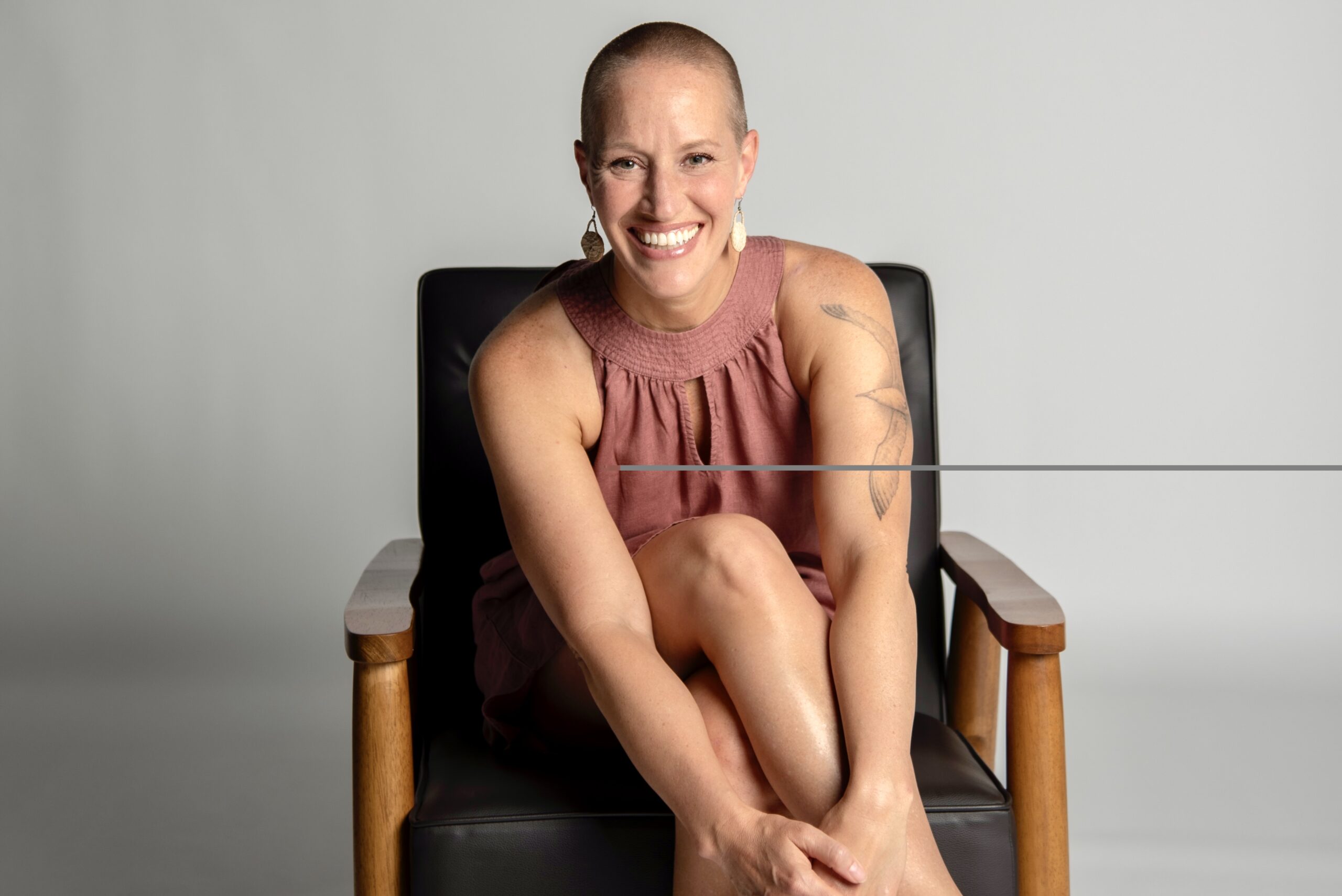
Sunshine Grace is a public educator, mental health advocate, and clairaudient medium specializing in shamanic illness, spiritual emergencies, contemporary psychedelic spirituality, and nondual awakenings. Her work centers on shifting the dominant narrative about these experiences, supporting compassionate care for people in distressing non-ordinary states and normalizing psychic abilities. You can follow her journey on YouTube at @Sunshine_Grace or visit her at bettingon.love. Marigolds, Mirrors, & Mediumship released in spring 2026 and The Retirement Dreams, released in July 2026 are her most recent films. And keep an eye out for her new 501(c)3 public charity, Center for Compassionate Awakenings, coming soon at centerforcompassionateawakenings.org.